 June
Green meadows, melting snow patches, and relatively low visitor numbers make June ideal for travellers seeking quieter trails.
July
Flowering begins across large sections of the valley. Waterfalls become more active and vegetation reaches peak lushness.
August
August is widely regarded as the best month to visit Valley of Flowers. Large portions of the valley become covered with blooming wildflowers, creating spectacular photographic opportunities.
September
Flower density gradually decreases, but weather conditions often become more stable and mountain visibility improves significantly.
Local Expert Tips for Choosing the Best Month
• Photographers interested in flowers should prioritize late July and early August.
• Travellers seeking clear Himalayan views should consider September.
• Weekdays generally experience lower footfall than weekends.
• Buffer days are recommended during monsoon months due to possible road delays.
Valley of Flowers Weather
Mountain weather can change rapidly.
Month Day Temperature Night Temperature
June 18°C 10°C
July 17°C 8°C
August 16°C 7°C
September 15°C 5°C
Weather Planning Tips
• Carry rain protection every day.
• Morning hours usually offer the clearest views.
• Afternoon showers are common during monsoon.
• Temperatures can feel significantly colder due to wind and rain.
Valley of Flowers Entry Requirements 2026
All visitors must obtain an entry permit before entering the national park.
Important Permit Information
Permits are required for:
• Indian citizens
• Foreign nationals
• Additional day visits
• Professional photography and filming activities (where applicable).
Entry Rules
• Camping inside the national park is strictly prohibited.
• Visitors must exit before designated closing hours.
• Littering and plastic waste are prohibited.
• Visitors should stay on designated trails.
Travellers should verify the latest entry fee and permit regulations before their journey, as government charges may change periodically.
Things to Do in Valley of Flowers
While the colourful alpine meadows are the primary attraction, the Valley of Flowers offers much more than flower viewing. From photography and wildlife observation to nature walks and botanical exploration, visitors can enjoy several unique experiences within the national park.
Walk Through the Famous Flower Meadows
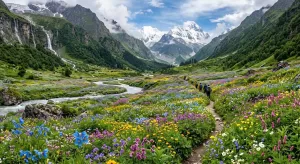
The main attraction of the Valley of Flowers is undoubtedly its vast expanse of blooming alpine flowers spread across rolling Himalayan grasslands.
During peak bloom season between late July and mid-August, visitors can witness an extraordinary variety of flowers covering the valley floor in shades of pink, purple, blue, yellow, red, and white. Every section of the valley presents a different combination of species, making each walk a unique experience. The constantly changing bloom cycle ensures that no two visits are exactly alike.
Explore the Pushpawati River Valley
The Pushpawati River flows through the Valley of Flowers and plays a vital role in sustaining the region’s rich ecosystem.
As you travel deeper into the valley, the river can be seen winding through flower-covered meadows, creating some of the most picturesque landscapes in the park.
Wildlife Spotting
The national park is home to a variety of Himalayan wildlife.
Visitors may occasionally encounter:
• Himalayan Monal
• Bharal (Blue Sheep)
• Musk Deer
• Red Fox
• Himalayan Black Bear
• Snow Leopard (extremely rare)
• Himalayan Langur
Birdwatching
Bird enthusiasts can spot:
• Himalayan Monal
• Snow Pigeon
• Himalayan Griffon
• Yellow-Billed Chough
• Rosefinches
• Laughing Thrushes
Nature Photography
Valley of Flowers is one of the finest photography destinations in Uttarakhand.
Popular photography subjects include:
• Wildflower carpets
• Waterfalls
• Mountain streams
• Mist-covered meadows
• Snow-capped peaks
• Rare flowers
Botanical Exploration
The valley is a paradise for botanists, students, and plant enthusiasts. With more than 600 flower species documented, visitors can observe one of the richest alpine floral ecosystems in the Himalayas.
Enjoy Scenic Himalayan Landscapes
Beyond flowers, the valley offers:
• Glacier-fed streams
• Alpine grasslands
• Rocky mountain cliffs
• Snow-covered peaks
• Waterfalls and cascades
Experience One of India’s Best Monsoon Destinations
The Valley of Flowers reaches its peak beauty during the monsoon season, making it one of the most rewarding experiences in India.
Attractions Within Valley of Flowers National Park
The Valley of Flowers is not just a single destination but an entire protected landscape filled with remarkable natural attractions.
Pushpawati River
Flowing through the heart of the Valley of Flowers, the Pushpawati River is one of the park’s most beautiful natural features. Fed by glacial streams and mountain runoff, the river winds through flower-covered meadows and rocky landscapes, creating picturesque views throughout the valley. Its crystal-clear waters play a vital role in sustaining the region’s rich biodiversity and vibrant floral ecosystem.
Flower-Covered Alpine Meadows
The colourful alpine meadows are the defining feature of the Valley of Flowers National Park and the primary reason visitors travel from around the world to experience this natural wonder. During peak bloom season, vast stretches of the valley transform into a vibrant carpet of wildflowers in shades of pink, purple, yellow, blue, and white, creating one of the most spectacular landscapes in the Himalayas.
Seasonal Waterfalls
Numerous waterfalls cascade down the surrounding mountain slopes during the monsoon months, adding to the valley’s scenic charm. Fed by melting snow and seasonal rainfall, these waterfalls become especially impressive between July and August. Their presence enhances the lush surroundings and provides countless photography opportunities along the route.
Himalayan Viewpoints
On clear days, visitors can enjoy magnificent views of the surrounding Himalayan peaks, ridgelines, and high-altitude landscapes. These viewpoints offer a stunning contrast between snow-capped mountains and colourful flower meadows, making them some of the most rewarding sections of the area. September often provides the best visibility for mountain views.
Rare Alpine Flora Zones
Certain areas within the valley contain concentrated clusters of rare Himalayan flowers and unique plant species that are difficult to find elsewhere. These biodiversity-rich zones attract botanists, researchers, photographers, and nature enthusiasts interested in studying the valley’s remarkable ecosystem and seasonal flowering patterns.
Forest and Meadow Transition Areas
The gradual transition between dense Himalayan forests and open alpine meadows creates some of the most scenic sections of the journey. As travellers gain elevation, they can observe changing vegetation, diverse landscapes, and beautiful natural contrasts. These transition zones also support a variety of birdlife and wildlife, making them particularly rewarding for nature lovers.
Nearby Attractions
Hemkund Sahib
Located at an elevation of about 4,329 meters, Hemkund Sahib is one of the highest Sikh pilgrimage sites in the world. Surrounded by snow-capped peaks and a glacial lake, it attracts both pilgrims and travellers. The steep trip from Ghangaria offers stunning mountain views, making it a popular addition to the Valley of Flowers itinerary.
Ghangaria
Ghangaria is the base camp for both the Valley of Flowers and Hemkund Sahib trips. This small mountain settlement offers accommodation, restaurants, and basic facilities for travellers. Most visitors spend at least two nights here while exploring the region.
Govindghat
Govindghat is the main starting point for the Valley of Flowers Trip and an important transit hub for travellers and pilgrims. Located on the banks of the Alaknanda River, it provides accommodation, transportation, and essential services before the trip begins.
Joshimath
Joshimath is a major Himalayan town and a popular stopover for travellers heading to Valley of Flowers, Hemkund Sahib, Auli, and Badrinath. Known for its scenic mountain views and convenient facilities, it serves as an ideal base for exploring the region.
Badrinath
Badrinath, one of the sacred Char Dham pilgrimage sites, is located about 25 kilometres from Govindghat. Dedicated to Lord Vishnu, the temple attracts pilgrims from across the country and is often included in a Valley of Flowers itinerary due to its spiritual significance and beautiful Himalayan setting.
How to Reach Valley of Flowers
By Air
Nearest airport:
Jolly Grant Airport, Dehradun
By Train
Nearest railway stations:
• Haridwar
• Rishikesh
By Road
Popular route:
Delhi → Haridwar → Rishikesh → Rudraprayag → Joshimath → Govindghat
Frequently Overlooked Travel Tips
Mobile Connectivity
Network coverage is limited and may vary significantly.
Cash Availability
Carry sufficient cash before reaching Govindghat.
Rain Protection
Monsoon weather can change unexpectedly.
Physical Fitness
Even beginner-friendly trips require reasonable endurance.
Responsible Tourism
• Do not pluck flowers.
• Avoid littering.
• Stay on designated trails.
• Respect wildlife habitats.
Frequently Asked Questions
1. Is Valley of Flowers open in 2026?
Yes, the Valley of Flowers National Park is open from June to October, subject to weather conditions and government regulations. Visitors should check the latest opening and closing dates before planning their trip.
2. What is the best time to visit Valley of Flowers?
The best time to visit Valley of Flowers is from late July to mid-August when the valley experiences peak bloom and the maximum variety of flowers can be seen across the meadows.
3. How difficult is the Valley of Flowers Trip?
The Valley of Flowers Trip is considered an easy-to-moderate Himalayan trip. It is suitable for beginners, families, and first-time travellers with a reasonable level of fitness.
4. How many days are required for the Valley of Flowers Trip?
A 4 to 6-day itinerary is ideal for covering Valley of Flowers and Hemkund Sahib comfortably, including travel to and from Govindghat.
5. What is the altitude of Valley of Flowers?
The Valley of Flowers is situated at an altitude of approximately 3,300 to 3,650 meters (10,800 to 12,000 feet) above sea level in the Chamoli district of Uttarakhand.
6. Can beginners do the Valley of Flowers Trip?
Yes, the trip is one of the most beginner-friendly Himalayan trips in India. Basic fitness and the ability to walk for several hours are usually sufficient for completing the trip.
7. Is Hemkund Sahib included in the Valley of Flowers Trip?
Hemkund Sahib is not part of the national park, but most travellers combine both destinations in a single itinerary since they share the same base camp at Ghangaria.
8. Is camping allowed inside Valley of Flowers National Park?
No, camping is strictly prohibited inside the national park to protect its fragile ecosystem. Visitors must stay in Ghangaria and return before park closing hours.
9. What are the famous flowers found in Valley of Flowers?
Some of the most famous flowers found in the valley include Blue Poppy, Brahma Kamal, Cobra Lily, Primulas, Anemones, Marsh Marigold, and Himalayan Bellflower.
10. What should I pack for the Valley of Flowers Trip?
Essential items include waterproof shoes, rain gear, warm clothing, a backpack, sunscreen, sunglasses, a water bottle, personal medicines, and a power bank.
11. How do I reach Valley of Flowers from Delhi?
The most common route is Delhi → Haridwar/Rishikesh → Joshimath → Govindghat → Ghangaria → Valley of Flowers. Travellers can reach Haridwar or Dehradun by train, flight, or road before continuing by road to Govindghat.
12. Can Valley of Flowers and Badrinath be covered in one trip?
Yes, many travellers combine Valley of Flowers, Hemkund Sahib, and Badrinath in a single itinerary, as all three destinations are located within the same region of Uttarakhand.
Conclusion: Why Valley of Flowers Remains One of India’s Best Monsoon Destinations
Few destinations combine biodiversity, accessibility, scenic beauty, spiritual significance, and Himalayan landscapes as effectively as Valley of Flowers.
Whether you are a first-time traveller, photographer, family traveller, botanist, or nature enthusiast, the trip offers an unforgettable experience during India’s monsoon season.
With proper planning, suitable gear, and awareness of mountain weather conditions, visitors can enjoy one of the most beautiful alpine valleys in the world while witnessing a remarkable natural phenomenon that occurs for only a few months each year.
Plan Your Valley of Flowers Trip with Himalaya Visit
Ready to experience one of India’s most beautiful UNESCO World Heritage Sites?
Himalaya Visit offers professionally curated Valley of Flowers tour packages with comfortable stays, experienced local experts, transportation support, and complete on-ground assistance.
Why Choose Himalaya Visit?
• Experienced local experts
• Carefully designed itineraries
• Comfortable accommodations
• Safe and hassle-free travel.
• Customizable packages for families, groups, and solo travellers.
Book your Valley of Flowers adventure today and witness the Himalayan bloom season at its most spectacular.
June
Green meadows, melting snow patches, and relatively low visitor numbers make June ideal for travellers seeking quieter trails.
July
Flowering begins across large sections of the valley. Waterfalls become more active and vegetation reaches peak lushness.
August
August is widely regarded as the best month to visit Valley of Flowers. Large portions of the valley become covered with blooming wildflowers, creating spectacular photographic opportunities.
September
Flower density gradually decreases, but weather conditions often become more stable and mountain visibility improves significantly.
Local Expert Tips for Choosing the Best Month
• Photographers interested in flowers should prioritize late July and early August.
• Travellers seeking clear Himalayan views should consider September.
• Weekdays generally experience lower footfall than weekends.
• Buffer days are recommended during monsoon months due to possible road delays.
Valley of Flowers Weather
Mountain weather can change rapidly.
Month Day Temperature Night Temperature
June 18°C 10°C
July 17°C 8°C
August 16°C 7°C
September 15°C 5°C
Weather Planning Tips
• Carry rain protection every day.
• Morning hours usually offer the clearest views.
• Afternoon showers are common during monsoon.
• Temperatures can feel significantly colder due to wind and rain.
Valley of Flowers Entry Requirements 2026
All visitors must obtain an entry permit before entering the national park.
Important Permit Information
Permits are required for:
• Indian citizens
• Foreign nationals
• Additional day visits
• Professional photography and filming activities (where applicable).
Entry Rules
• Camping inside the national park is strictly prohibited.
• Visitors must exit before designated closing hours.
• Littering and plastic waste are prohibited.
• Visitors should stay on designated trails.
Travellers should verify the latest entry fee and permit regulations before their journey, as government charges may change periodically.
Things to Do in Valley of Flowers
While the colourful alpine meadows are the primary attraction, the Valley of Flowers offers much more than flower viewing. From photography and wildlife observation to nature walks and botanical exploration, visitors can enjoy several unique experiences within the national park.
Walk Through the Famous Flower Meadows
The main attraction of the Valley of Flowers is undoubtedly its vast expanse of blooming alpine flowers spread across rolling Himalayan grasslands.
During peak bloom season between late July and mid-August, visitors can witness an extraordinary variety of flowers covering the valley floor in shades of pink, purple, blue, yellow, red, and white. Every section of the valley presents a different combination of species, making each walk a unique experience. The constantly changing bloom cycle ensures that no two visits are exactly alike.
Explore the Pushpawati River Valley
The Pushpawati River flows through the Valley of Flowers and plays a vital role in sustaining the region’s rich ecosystem.
As you travel deeper into the valley, the river can be seen winding through flower-covered meadows, creating some of the most picturesque landscapes in the park.
Wildlife Spotting
The national park is home to a variety of Himalayan wildlife.
Visitors may occasionally encounter:
• Himalayan Monal
• Bharal (Blue Sheep)
• Musk Deer
• Red Fox
• Himalayan Black Bear
• Snow Leopard (extremely rare)
• Himalayan Langur
Birdwatching
Bird enthusiasts can spot:
• Himalayan Monal
• Snow Pigeon
• Himalayan Griffon
• Yellow-Billed Chough
• Rosefinches
• Laughing Thrushes
Nature Photography
Valley of Flowers is one of the finest photography destinations in Uttarakhand.
Popular photography subjects include:
• Wildflower carpets
• Waterfalls
• Mountain streams
• Mist-covered meadows
• Snow-capped peaks
• Rare flowers
Botanical Exploration
The valley is a paradise for botanists, students, and plant enthusiasts. With more than 600 flower species documented, visitors can observe one of the richest alpine floral ecosystems in the Himalayas.
Enjoy Scenic Himalayan Landscapes
Beyond flowers, the valley offers:
• Glacier-fed streams
• Alpine grasslands
• Rocky mountain cliffs
• Snow-covered peaks
• Waterfalls and cascades
Experience One of India’s Best Monsoon Destinations
The Valley of Flowers reaches its peak beauty during the monsoon season, making it one of the most rewarding experiences in India.
Attractions Within Valley of Flowers National Park
The Valley of Flowers is not just a single destination but an entire protected landscape filled with remarkable natural attractions.
Pushpawati River
Flowing through the heart of the Valley of Flowers, the Pushpawati River is one of the park’s most beautiful natural features. Fed by glacial streams and mountain runoff, the river winds through flower-covered meadows and rocky landscapes, creating picturesque views throughout the valley. Its crystal-clear waters play a vital role in sustaining the region’s rich biodiversity and vibrant floral ecosystem.
Flower-Covered Alpine Meadows
The colourful alpine meadows are the defining feature of the Valley of Flowers National Park and the primary reason visitors travel from around the world to experience this natural wonder. During peak bloom season, vast stretches of the valley transform into a vibrant carpet of wildflowers in shades of pink, purple, yellow, blue, and white, creating one of the most spectacular landscapes in the Himalayas.
Seasonal Waterfalls
Numerous waterfalls cascade down the surrounding mountain slopes during the monsoon months, adding to the valley’s scenic charm. Fed by melting snow and seasonal rainfall, these waterfalls become especially impressive between July and August. Their presence enhances the lush surroundings and provides countless photography opportunities along the route.
Himalayan Viewpoints
On clear days, visitors can enjoy magnificent views of the surrounding Himalayan peaks, ridgelines, and high-altitude landscapes. These viewpoints offer a stunning contrast between snow-capped mountains and colourful flower meadows, making them some of the most rewarding sections of the area. September often provides the best visibility for mountain views.
Rare Alpine Flora Zones
Certain areas within the valley contain concentrated clusters of rare Himalayan flowers and unique plant species that are difficult to find elsewhere. These biodiversity-rich zones attract botanists, researchers, photographers, and nature enthusiasts interested in studying the valley’s remarkable ecosystem and seasonal flowering patterns.
Forest and Meadow Transition Areas
The gradual transition between dense Himalayan forests and open alpine meadows creates some of the most scenic sections of the journey. As travellers gain elevation, they can observe changing vegetation, diverse landscapes, and beautiful natural contrasts. These transition zones also support a variety of birdlife and wildlife, making them particularly rewarding for nature lovers.
Nearby Attractions
Hemkund Sahib
Located at an elevation of about 4,329 meters, Hemkund Sahib is one of the highest Sikh pilgrimage sites in the world. Surrounded by snow-capped peaks and a glacial lake, it attracts both pilgrims and travellers. The steep trip from Ghangaria offers stunning mountain views, making it a popular addition to the Valley of Flowers itinerary.
Ghangaria
Ghangaria is the base camp for both the Valley of Flowers and Hemkund Sahib trips. This small mountain settlement offers accommodation, restaurants, and basic facilities for travellers. Most visitors spend at least two nights here while exploring the region.
Govindghat
Govindghat is the main starting point for the Valley of Flowers Trip and an important transit hub for travellers and pilgrims. Located on the banks of the Alaknanda River, it provides accommodation, transportation, and essential services before the trip begins.
Joshimath
Joshimath is a major Himalayan town and a popular stopover for travellers heading to Valley of Flowers, Hemkund Sahib, Auli, and Badrinath. Known for its scenic mountain views and convenient facilities, it serves as an ideal base for exploring the region.
Badrinath
Badrinath, one of the sacred Char Dham pilgrimage sites, is located about 25 kilometres from Govindghat. Dedicated to Lord Vishnu, the temple attracts pilgrims from across the country and is often included in a Valley of Flowers itinerary due to its spiritual significance and beautiful Himalayan setting.
How to Reach Valley of Flowers
By Air
Nearest airport:
Jolly Grant Airport, Dehradun
By Train
Nearest railway stations:
• Haridwar
• Rishikesh
By Road
Popular route:
Delhi → Haridwar → Rishikesh → Rudraprayag → Joshimath → Govindghat
Frequently Overlooked Travel Tips
Mobile Connectivity
Network coverage is limited and may vary significantly.
Cash Availability
Carry sufficient cash before reaching Govindghat.
Rain Protection
Monsoon weather can change unexpectedly.
Physical Fitness
Even beginner-friendly trips require reasonable endurance.
Responsible Tourism
• Do not pluck flowers.
• Avoid littering.
• Stay on designated trails.
• Respect wildlife habitats.
Frequently Asked Questions
1. Is Valley of Flowers open in 2026?
Yes, the Valley of Flowers National Park is open from June to October, subject to weather conditions and government regulations. Visitors should check the latest opening and closing dates before planning their trip.
2. What is the best time to visit Valley of Flowers?
The best time to visit Valley of Flowers is from late July to mid-August when the valley experiences peak bloom and the maximum variety of flowers can be seen across the meadows.
3. How difficult is the Valley of Flowers Trip?
The Valley of Flowers Trip is considered an easy-to-moderate Himalayan trip. It is suitable for beginners, families, and first-time travellers with a reasonable level of fitness.
4. How many days are required for the Valley of Flowers Trip?
A 4 to 6-day itinerary is ideal for covering Valley of Flowers and Hemkund Sahib comfortably, including travel to and from Govindghat.
5. What is the altitude of Valley of Flowers?
The Valley of Flowers is situated at an altitude of approximately 3,300 to 3,650 meters (10,800 to 12,000 feet) above sea level in the Chamoli district of Uttarakhand.
6. Can beginners do the Valley of Flowers Trip?
Yes, the trip is one of the most beginner-friendly Himalayan trips in India. Basic fitness and the ability to walk for several hours are usually sufficient for completing the trip.
7. Is Hemkund Sahib included in the Valley of Flowers Trip?
Hemkund Sahib is not part of the national park, but most travellers combine both destinations in a single itinerary since they share the same base camp at Ghangaria.
8. Is camping allowed inside Valley of Flowers National Park?
No, camping is strictly prohibited inside the national park to protect its fragile ecosystem. Visitors must stay in Ghangaria and return before park closing hours.
9. What are the famous flowers found in Valley of Flowers?
Some of the most famous flowers found in the valley include Blue Poppy, Brahma Kamal, Cobra Lily, Primulas, Anemones, Marsh Marigold, and Himalayan Bellflower.
10. What should I pack for the Valley of Flowers Trip?
Essential items include waterproof shoes, rain gear, warm clothing, a backpack, sunscreen, sunglasses, a water bottle, personal medicines, and a power bank.
11. How do I reach Valley of Flowers from Delhi?
The most common route is Delhi → Haridwar/Rishikesh → Joshimath → Govindghat → Ghangaria → Valley of Flowers. Travellers can reach Haridwar or Dehradun by train, flight, or road before continuing by road to Govindghat.
12. Can Valley of Flowers and Badrinath be covered in one trip?
Yes, many travellers combine Valley of Flowers, Hemkund Sahib, and Badrinath in a single itinerary, as all three destinations are located within the same region of Uttarakhand.
Conclusion: Why Valley of Flowers Remains One of India’s Best Monsoon Destinations
Few destinations combine biodiversity, accessibility, scenic beauty, spiritual significance, and Himalayan landscapes as effectively as Valley of Flowers.
Whether you are a first-time traveller, photographer, family traveller, botanist, or nature enthusiast, the trip offers an unforgettable experience during India’s monsoon season.
With proper planning, suitable gear, and awareness of mountain weather conditions, visitors can enjoy one of the most beautiful alpine valleys in the world while witnessing a remarkable natural phenomenon that occurs for only a few months each year.
Plan Your Valley of Flowers Trip with Himalaya Visit
Ready to experience one of India’s most beautiful UNESCO World Heritage Sites?
Himalaya Visit offers professionally curated Valley of Flowers tour packages with comfortable stays, experienced local experts, transportation support, and complete on-ground assistance.
Why Choose Himalaya Visit?
• Experienced local experts
• Carefully designed itineraries
• Comfortable accommodations
• Safe and hassle-free travel.
• Customizable packages for families, groups, and solo travellers.
Book your Valley of Flowers adventure today and witness the Himalayan bloom season at its most spectacular.
Valley of Flowers : Best Time to Visit, Route, Cost, Entry Fee & Complete Travel Guide
Valley of Flowers 2026: Best Time to Visit, Route, Cost, Entry Fee & Complete Travel Guide
Valley of Flowers 2026: Introduction
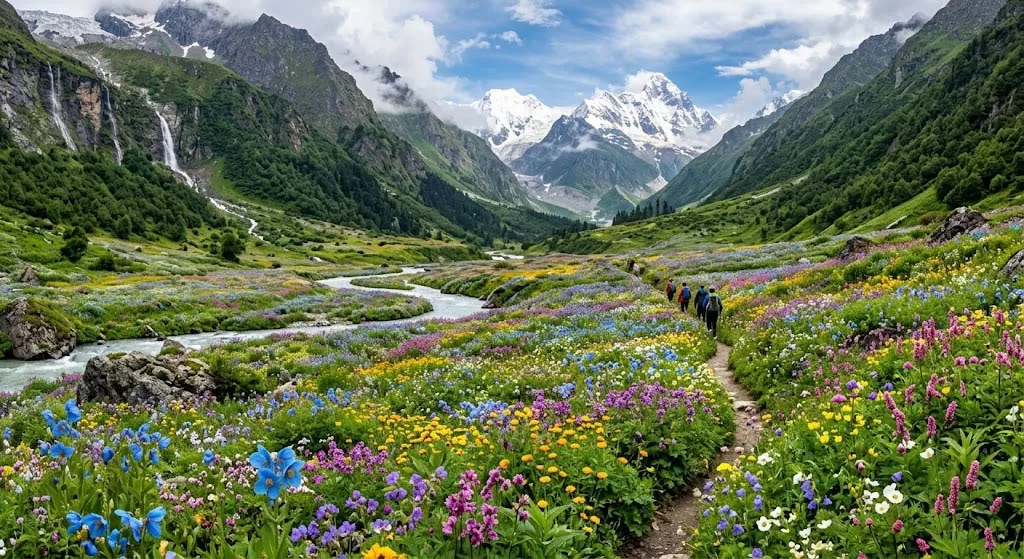
The Valley of Flowers is one of India’s most spectacular Himalayan experiences and among the most popular monsoon destinations in Uttarakhand. Located in the Chamoli district within the Nanda Devi Biosphere Reserve, the Valley of Flowers National Park is a UNESCO World Heritage Site renowned for its vibrant alpine meadows, rare Himalayan flora, waterfalls, glaciers, and breathtaking mountain landscapes.
Every year, as the snow melts and monsoon rains arrive, the valley transforms into a colourful carpet of wildflowers spread across vast alpine grasslands. During peak bloom, visitors can witness hundreds of flower species flowering simultaneously against a backdrop of snow-clad peaks and mist-covered valleys.
Valley of flowers attracts nature lovers, photographers, botanists, pilgrims, families from across India and around the world. The Valley of Flowers lies at an elevation of approximately 3,300–3,650 meters and covers nearly 87.5 square kilometres. Home to more than 600 documented species of flowering plants, the region is internationally recognized for its exceptional biodiversity and ecological importance.
This comprehensive Valley of Flowers 2026 guide covers the best time to visit, weather, local travel tips, and everything required to plan a successful trip.
Valley of Flowers at a Glance
Feature Details
Location Chamoli District, Uttarakhand
Elevation 3,300–3,650 meters
Best Season July to September
Peak Bloom Late July to Mid-August
UNESCO Status World Heritage Site
Nearest Airport Jolly Grant Airport, Dehradun
Nearest Railway Station Haridwar / Rishikesh
Why is Valley of Flowers Famous?
The Valley of Flowers is famous for its seasonal bloom of over 600 species of alpine flowers, stunning Himalayan scenery, rich biodiversity, and UNESCO World Heritage status. It is widely regarded as one of the best monsoon destinations in India.
The valley gained international recognition after British mountaineer Frank Smythe discovered it in 1931 while returning from a Himalayan expedition. Captivated by its colourful meadows, he named it the “Valley of Flowers,” a name that remains synonymous with this natural wonder today.
UNESCO World Heritage Site and Biodiversity
The Valley of Flowers National Park forms part of the UNESCO-listed Nanda Devi and Valley of Flowers National Parks. The region supports a remarkable range of plant and animal life and serves as a critical conservation area within the Himalayan ecosystem.
Rare Flowers Found in Valley of Flowers
Visitors may encounter:
• Blue Poppy
• Brahma Kamal
• Primulas
• Himalayan Bellflower
• Cobra Lily
• Anemones
• Geraniums
• Marsh Marigolds
• Bluebells
• Himalayan Knotweed
The flowering pattern changes every few weeks, making each visit unique.
Best Time to Visit Valley of Flowers in 2026
Choosing the correct month is one of the most important factors when planning your trip.
Month-by-Month Comparison
Month Flowers Crowds Visibility Recommended For
June Low Low Moderate Early season travellers
July High Moderate Moderate Flower photography
August Peak High Moderate Best floral display
September Moderate Low Excellent Mountain views
June
Green meadows, melting snow patches, and relatively low visitor numbers make June ideal for travellers seeking quieter trails.
July
Flowering begins across large sections of the valley. Waterfalls become more active and vegetation reaches peak lushness.
August
August is widely regarded as the best month to visit Valley of Flowers. Large portions of the valley become covered with blooming wildflowers, creating spectacular photographic opportunities.
September
Flower density gradually decreases, but weather conditions often become more stable and mountain visibility improves significantly.
Local Expert Tips for Choosing the Best Month
• Photographers interested in flowers should prioritize late July and early August.
• Travellers seeking clear Himalayan views should consider September.
• Weekdays generally experience lower footfall than weekends.
• Buffer days are recommended during monsoon months due to possible road delays.
Valley of Flowers Weather
Mountain weather can change rapidly.
Month Day Temperature Night Temperature
June 18°C 10°C
July 17°C 8°C
August 16°C 7°C
September 15°C 5°C
Weather Planning Tips
• Carry rain protection every day.
• Morning hours usually offer the clearest views.
• Afternoon showers are common during monsoon.
• Temperatures can feel significantly colder due to wind and rain.
Valley of Flowers Entry Requirements 2026
All visitors must obtain an entry permit before entering the national park.
Important Permit Information
Permits are required for:
• Indian citizens
• Foreign nationals
• Additional day visits
• Professional photography and filming activities (where applicable).
Entry Rules
• Camping inside the national park is strictly prohibited.
• Visitors must exit before designated closing hours.
• Littering and plastic waste are prohibited.
• Visitors should stay on designated trails.
Travellers should verify the latest entry fee and permit regulations before their journey, as government charges may change periodically.
Things to Do in Valley of Flowers
While the colourful alpine meadows are the primary attraction, the Valley of Flowers offers much more than flower viewing. From photography and wildlife observation to nature walks and botanical exploration, visitors can enjoy several unique experiences within the national park.
Walk Through the Famous Flower Meadows
The main attraction of the Valley of Flowers is undoubtedly its vast expanse of blooming alpine flowers spread across rolling Himalayan grasslands.
During peak bloom season between late July and mid-August, visitors can witness an extraordinary variety of flowers covering the valley floor in shades of pink, purple, blue, yellow, red, and white. Every section of the valley presents a different combination of species, making each walk a unique experience. The constantly changing bloom cycle ensures that no two visits are exactly alike.
Explore the Pushpawati River Valley
The Pushpawati River flows through the Valley of Flowers and plays a vital role in sustaining the region’s rich ecosystem.
As you travel deeper into the valley, the river can be seen winding through flower-covered meadows, creating some of the most picturesque landscapes in the park.
Wildlife Spotting
The national park is home to a variety of Himalayan wildlife.
Visitors may occasionally encounter:
• Himalayan Monal
• Bharal (Blue Sheep)
• Musk Deer
• Red Fox
• Himalayan Black Bear
• Snow Leopard (extremely rare)
• Himalayan Langur
Birdwatching
Bird enthusiasts can spot:
• Himalayan Monal
• Snow Pigeon
• Himalayan Griffon
• Yellow-Billed Chough
• Rosefinches
• Laughing Thrushes
Nature Photography
Valley of Flowers is one of the finest photography destinations in Uttarakhand.
Popular photography subjects include:
• Wildflower carpets
• Waterfalls
• Mountain streams
• Mist-covered meadows
• Snow-capped peaks
• Rare flowers
Botanical Exploration
The valley is a paradise for botanists, students, and plant enthusiasts. With more than 600 flower species documented, visitors can observe one of the richest alpine floral ecosystems in the Himalayas.
Enjoy Scenic Himalayan Landscapes
Beyond flowers, the valley offers:
• Glacier-fed streams
• Alpine grasslands
• Rocky mountain cliffs
• Snow-covered peaks
• Waterfalls and cascades
Experience One of India’s Best Monsoon Destinations
The Valley of Flowers reaches its peak beauty during the monsoon season, making it one of the most rewarding experiences in India.
Attractions Within Valley of Flowers National Park
The Valley of Flowers is not just a single destination but an entire protected landscape filled with remarkable natural attractions.
Pushpawati River
Flowing through the heart of the Valley of Flowers, the Pushpawati River is one of the park’s most beautiful natural features. Fed by glacial streams and mountain runoff, the river winds through flower-covered meadows and rocky landscapes, creating picturesque views throughout the valley. Its crystal-clear waters play a vital role in sustaining the region’s rich biodiversity and vibrant floral ecosystem.
Flower-Covered Alpine Meadows
The colourful alpine meadows are the defining feature of the Valley of Flowers National Park and the primary reason visitors travel from around the world to experience this natural wonder. During peak bloom season, vast stretches of the valley transform into a vibrant carpet of wildflowers in shades of pink, purple, yellow, blue, and white, creating one of the most spectacular landscapes in the Himalayas.
Seasonal Waterfalls
Numerous waterfalls cascade down the surrounding mountain slopes during the monsoon months, adding to the valley’s scenic charm. Fed by melting snow and seasonal rainfall, these waterfalls become especially impressive between July and August. Their presence enhances the lush surroundings and provides countless photography opportunities along the route.
Himalayan Viewpoints
On clear days, visitors can enjoy magnificent views of the surrounding Himalayan peaks, ridgelines, and high-altitude landscapes. These viewpoints offer a stunning contrast between snow-capped mountains and colourful flower meadows, making them some of the most rewarding sections of the area. September often provides the best visibility for mountain views.
Rare Alpine Flora Zones
Certain areas within the valley contain concentrated clusters of rare Himalayan flowers and unique plant species that are difficult to find elsewhere. These biodiversity-rich zones attract botanists, researchers, photographers, and nature enthusiasts interested in studying the valley’s remarkable ecosystem and seasonal flowering patterns.
Forest and Meadow Transition Areas
The gradual transition between dense Himalayan forests and open alpine meadows creates some of the most scenic sections of the journey. As travellers gain elevation, they can observe changing vegetation, diverse landscapes, and beautiful natural contrasts. These transition zones also support a variety of birdlife and wildlife, making them particularly rewarding for nature lovers.
Nearby Attractions
Hemkund Sahib
Located at an elevation of about 4,329 meters, Hemkund Sahib is one of the highest Sikh pilgrimage sites in the world. Surrounded by snow-capped peaks and a glacial lake, it attracts both pilgrims and travellers. The steep trip from Ghangaria offers stunning mountain views, making it a popular addition to the Valley of Flowers itinerary.
Ghangaria
Ghangaria is the base camp for both the Valley of Flowers and Hemkund Sahib trips. This small mountain settlement offers accommodation, restaurants, and basic facilities for travellers. Most visitors spend at least two nights here while exploring the region.
Govindghat
Govindghat is the main starting point for the Valley of Flowers Trip and an important transit hub for travellers and pilgrims. Located on the banks of the Alaknanda River, it provides accommodation, transportation, and essential services before the trip begins.
Joshimath
Joshimath is a major Himalayan town and a popular stopover for travellers heading to Valley of Flowers, Hemkund Sahib, Auli, and Badrinath. Known for its scenic mountain views and convenient facilities, it serves as an ideal base for exploring the region.
Badrinath
Badrinath, one of the sacred Char Dham pilgrimage sites, is located about 25 kilometres from Govindghat. Dedicated to Lord Vishnu, the temple attracts pilgrims from across the country and is often included in a Valley of Flowers itinerary due to its spiritual significance and beautiful Himalayan setting.
How to Reach Valley of Flowers
By Air
Nearest airport:
Jolly Grant Airport, Dehradun
By Train
Nearest railway stations:
• Haridwar
• Rishikesh
By Road
Popular route:
Delhi → Haridwar → Rishikesh → Rudraprayag → Joshimath → Govindghat
Frequently Overlooked Travel Tips
Mobile Connectivity
Network coverage is limited and may vary significantly.
Cash Availability
Carry sufficient cash before reaching Govindghat.
Rain Protection
Monsoon weather can change unexpectedly.
Physical Fitness
Even beginner-friendly trips require reasonable endurance.
Responsible Tourism
• Do not pluck flowers.
• Avoid littering.
• Stay on designated trails.
• Respect wildlife habitats.
Frequently Asked Questions
1. Is Valley of Flowers open in 2026?
Yes, the Valley of Flowers National Park is open from June to October, subject to weather conditions and government regulations. Visitors should check the latest opening and closing dates before planning their trip.
2. What is the best time to visit Valley of Flowers?
The best time to visit Valley of Flowers is from late July to mid-August when the valley experiences peak bloom and the maximum variety of flowers can be seen across the meadows.
3. How difficult is the Valley of Flowers Trip?
The Valley of Flowers Trip is considered an easy-to-moderate Himalayan trip. It is suitable for beginners, families, and first-time travellers with a reasonable level of fitness.
4. How many days are required for the Valley of Flowers Trip?
A 4 to 6-day itinerary is ideal for covering Valley of Flowers and Hemkund Sahib comfortably, including travel to and from Govindghat.
5. What is the altitude of Valley of Flowers?
The Valley of Flowers is situated at an altitude of approximately 3,300 to 3,650 meters (10,800 to 12,000 feet) above sea level in the Chamoli district of Uttarakhand.
6. Can beginners do the Valley of Flowers Trip?
Yes, the trip is one of the most beginner-friendly Himalayan trips in India. Basic fitness and the ability to walk for several hours are usually sufficient for completing the trip.
7. Is Hemkund Sahib included in the Valley of Flowers Trip?
Hemkund Sahib is not part of the national park, but most travellers combine both destinations in a single itinerary since they share the same base camp at Ghangaria.
8. Is camping allowed inside Valley of Flowers National Park?
No, camping is strictly prohibited inside the national park to protect its fragile ecosystem. Visitors must stay in Ghangaria and return before park closing hours.
9. What are the famous flowers found in Valley of Flowers?
Some of the most famous flowers found in the valley include Blue Poppy, Brahma Kamal, Cobra Lily, Primulas, Anemones, Marsh Marigold, and Himalayan Bellflower.
10. What should I pack for the Valley of Flowers Trip?
Essential items include waterproof shoes, rain gear, warm clothing, a backpack, sunscreen, sunglasses, a water bottle, personal medicines, and a power bank.
11. How do I reach Valley of Flowers from Delhi?
The most common route is Delhi → Haridwar/Rishikesh → Joshimath → Govindghat → Ghangaria → Valley of Flowers. Travellers can reach Haridwar or Dehradun by train, flight, or road before continuing by road to Govindghat.
12. Can Valley of Flowers and Badrinath be covered in one trip?
Yes, many travellers combine Valley of Flowers, Hemkund Sahib, and Badrinath in a single itinerary, as all three destinations are located within the same region of Uttarakhand.
Conclusion: Why Valley of Flowers Remains One of India’s Best Monsoon Destinations
Few destinations combine biodiversity, accessibility, scenic beauty, spiritual significance, and Himalayan landscapes as effectively as Valley of Flowers.
Whether you are a first-time traveller, photographer, family traveller, botanist, or nature enthusiast, the trip offers an unforgettable experience during India’s monsoon season.
With proper planning, suitable gear, and awareness of mountain weather conditions, visitors can enjoy one of the most beautiful alpine valleys in the world while witnessing a remarkable natural phenomenon that occurs for only a few months each year.
Plan Your Valley of Flowers Trip with Himalaya Visit
Ready to experience one of India’s most beautiful UNESCO World Heritage Sites?
Himalaya Visit offers professionally curated Valley of Flowers tour packages with comfortable stays, experienced local experts, transportation support, and complete on-ground assistance.
Why Choose Himalaya Visit?
• Experienced local experts
• Carefully designed itineraries
• Comfortable accommodations
• Safe and hassle-free travel.
• Customizable packages for families, groups, and solo travellers.
Book your Valley of Flowers adventure today and witness the Himalayan bloom season at its most spectacular.
June
Green meadows, melting snow patches, and relatively low visitor numbers make June ideal for travellers seeking quieter trails.
July
Flowering begins across large sections of the valley. Waterfalls become more active and vegetation reaches peak lushness.
August
August is widely regarded as the best month to visit Valley of Flowers. Large portions of the valley become covered with blooming wildflowers, creating spectacular photographic opportunities.
September
Flower density gradually decreases, but weather conditions often become more stable and mountain visibility improves significantly.
Local Expert Tips for Choosing the Best Month
• Photographers interested in flowers should prioritize late July and early August.
• Travellers seeking clear Himalayan views should consider September.
• Weekdays generally experience lower footfall than weekends.
• Buffer days are recommended during monsoon months due to possible road delays.
Valley of Flowers Weather
Mountain weather can change rapidly.
Month Day Temperature Night Temperature
June 18°C 10°C
July 17°C 8°C
August 16°C 7°C
September 15°C 5°C
Weather Planning Tips
• Carry rain protection every day.
• Morning hours usually offer the clearest views.
• Afternoon showers are common during monsoon.
• Temperatures can feel significantly colder due to wind and rain.
Valley of Flowers Entry Requirements 2026
All visitors must obtain an entry permit before entering the national park.
Important Permit Information
Permits are required for:
• Indian citizens
• Foreign nationals
• Additional day visits
• Professional photography and filming activities (where applicable).
Entry Rules
• Camping inside the national park is strictly prohibited.
• Visitors must exit before designated closing hours.
• Littering and plastic waste are prohibited.
• Visitors should stay on designated trails.
Travellers should verify the latest entry fee and permit regulations before their journey, as government charges may change periodically.
Things to Do in Valley of Flowers
While the colourful alpine meadows are the primary attraction, the Valley of Flowers offers much more than flower viewing. From photography and wildlife observation to nature walks and botanical exploration, visitors can enjoy several unique experiences within the national park.
Walk Through the Famous Flower Meadows
The main attraction of the Valley of Flowers is undoubtedly its vast expanse of blooming alpine flowers spread across rolling Himalayan grasslands.
During peak bloom season between late July and mid-August, visitors can witness an extraordinary variety of flowers covering the valley floor in shades of pink, purple, blue, yellow, red, and white. Every section of the valley presents a different combination of species, making each walk a unique experience. The constantly changing bloom cycle ensures that no two visits are exactly alike.
Explore the Pushpawati River Valley
The Pushpawati River flows through the Valley of Flowers and plays a vital role in sustaining the region’s rich ecosystem.
As you travel deeper into the valley, the river can be seen winding through flower-covered meadows, creating some of the most picturesque landscapes in the park.
Wildlife Spotting
The national park is home to a variety of Himalayan wildlife.
Visitors may occasionally encounter:
• Himalayan Monal
• Bharal (Blue Sheep)
• Musk Deer
• Red Fox
• Himalayan Black Bear
• Snow Leopard (extremely rare)
• Himalayan Langur
Birdwatching
Bird enthusiasts can spot:
• Himalayan Monal
• Snow Pigeon
• Himalayan Griffon
• Yellow-Billed Chough
• Rosefinches
• Laughing Thrushes
Nature Photography
Valley of Flowers is one of the finest photography destinations in Uttarakhand.
Popular photography subjects include:
• Wildflower carpets
• Waterfalls
• Mountain streams
• Mist-covered meadows
• Snow-capped peaks
• Rare flowers
Botanical Exploration
The valley is a paradise for botanists, students, and plant enthusiasts. With more than 600 flower species documented, visitors can observe one of the richest alpine floral ecosystems in the Himalayas.
Enjoy Scenic Himalayan Landscapes
Beyond flowers, the valley offers:
• Glacier-fed streams
• Alpine grasslands
• Rocky mountain cliffs
• Snow-covered peaks
• Waterfalls and cascades
Experience One of India’s Best Monsoon Destinations
The Valley of Flowers reaches its peak beauty during the monsoon season, making it one of the most rewarding experiences in India.
Attractions Within Valley of Flowers National Park
The Valley of Flowers is not just a single destination but an entire protected landscape filled with remarkable natural attractions.
Pushpawati River
Flowing through the heart of the Valley of Flowers, the Pushpawati River is one of the park’s most beautiful natural features. Fed by glacial streams and mountain runoff, the river winds through flower-covered meadows and rocky landscapes, creating picturesque views throughout the valley. Its crystal-clear waters play a vital role in sustaining the region’s rich biodiversity and vibrant floral ecosystem.
Flower-Covered Alpine Meadows
The colourful alpine meadows are the defining feature of the Valley of Flowers National Park and the primary reason visitors travel from around the world to experience this natural wonder. During peak bloom season, vast stretches of the valley transform into a vibrant carpet of wildflowers in shades of pink, purple, yellow, blue, and white, creating one of the most spectacular landscapes in the Himalayas.
Seasonal Waterfalls
Numerous waterfalls cascade down the surrounding mountain slopes during the monsoon months, adding to the valley’s scenic charm. Fed by melting snow and seasonal rainfall, these waterfalls become especially impressive between July and August. Their presence enhances the lush surroundings and provides countless photography opportunities along the route.
Himalayan Viewpoints
On clear days, visitors can enjoy magnificent views of the surrounding Himalayan peaks, ridgelines, and high-altitude landscapes. These viewpoints offer a stunning contrast between snow-capped mountains and colourful flower meadows, making them some of the most rewarding sections of the area. September often provides the best visibility for mountain views.
Rare Alpine Flora Zones
Certain areas within the valley contain concentrated clusters of rare Himalayan flowers and unique plant species that are difficult to find elsewhere. These biodiversity-rich zones attract botanists, researchers, photographers, and nature enthusiasts interested in studying the valley’s remarkable ecosystem and seasonal flowering patterns.
Forest and Meadow Transition Areas
The gradual transition between dense Himalayan forests and open alpine meadows creates some of the most scenic sections of the journey. As travellers gain elevation, they can observe changing vegetation, diverse landscapes, and beautiful natural contrasts. These transition zones also support a variety of birdlife and wildlife, making them particularly rewarding for nature lovers.
Nearby Attractions
Hemkund Sahib
Located at an elevation of about 4,329 meters, Hemkund Sahib is one of the highest Sikh pilgrimage sites in the world. Surrounded by snow-capped peaks and a glacial lake, it attracts both pilgrims and travellers. The steep trip from Ghangaria offers stunning mountain views, making it a popular addition to the Valley of Flowers itinerary.
Ghangaria
Ghangaria is the base camp for both the Valley of Flowers and Hemkund Sahib trips. This small mountain settlement offers accommodation, restaurants, and basic facilities for travellers. Most visitors spend at least two nights here while exploring the region.
Govindghat
Govindghat is the main starting point for the Valley of Flowers Trip and an important transit hub for travellers and pilgrims. Located on the banks of the Alaknanda River, it provides accommodation, transportation, and essential services before the trip begins.
Joshimath
Joshimath is a major Himalayan town and a popular stopover for travellers heading to Valley of Flowers, Hemkund Sahib, Auli, and Badrinath. Known for its scenic mountain views and convenient facilities, it serves as an ideal base for exploring the region.
Badrinath
Badrinath, one of the sacred Char Dham pilgrimage sites, is located about 25 kilometres from Govindghat. Dedicated to Lord Vishnu, the temple attracts pilgrims from across the country and is often included in a Valley of Flowers itinerary due to its spiritual significance and beautiful Himalayan setting.
How to Reach Valley of Flowers
By Air
Nearest airport:
Jolly Grant Airport, Dehradun
By Train
Nearest railway stations:
• Haridwar
• Rishikesh
By Road
Popular route:
Delhi → Haridwar → Rishikesh → Rudraprayag → Joshimath → Govindghat
Frequently Overlooked Travel Tips
Mobile Connectivity
Network coverage is limited and may vary significantly.
Cash Availability
Carry sufficient cash before reaching Govindghat.
Rain Protection
Monsoon weather can change unexpectedly.
Physical Fitness
Even beginner-friendly trips require reasonable endurance.
Responsible Tourism
• Do not pluck flowers.
• Avoid littering.
• Stay on designated trails.
• Respect wildlife habitats.
Frequently Asked Questions
1. Is Valley of Flowers open in 2026?
Yes, the Valley of Flowers National Park is open from June to October, subject to weather conditions and government regulations. Visitors should check the latest opening and closing dates before planning their trip.
2. What is the best time to visit Valley of Flowers?
The best time to visit Valley of Flowers is from late July to mid-August when the valley experiences peak bloom and the maximum variety of flowers can be seen across the meadows.
3. How difficult is the Valley of Flowers Trip?
The Valley of Flowers Trip is considered an easy-to-moderate Himalayan trip. It is suitable for beginners, families, and first-time travellers with a reasonable level of fitness.
4. How many days are required for the Valley of Flowers Trip?
A 4 to 6-day itinerary is ideal for covering Valley of Flowers and Hemkund Sahib comfortably, including travel to and from Govindghat.
5. What is the altitude of Valley of Flowers?
The Valley of Flowers is situated at an altitude of approximately 3,300 to 3,650 meters (10,800 to 12,000 feet) above sea level in the Chamoli district of Uttarakhand.
6. Can beginners do the Valley of Flowers Trip?
Yes, the trip is one of the most beginner-friendly Himalayan trips in India. Basic fitness and the ability to walk for several hours are usually sufficient for completing the trip.
7. Is Hemkund Sahib included in the Valley of Flowers Trip?
Hemkund Sahib is not part of the national park, but most travellers combine both destinations in a single itinerary since they share the same base camp at Ghangaria.
8. Is camping allowed inside Valley of Flowers National Park?
No, camping is strictly prohibited inside the national park to protect its fragile ecosystem. Visitors must stay in Ghangaria and return before park closing hours.
9. What are the famous flowers found in Valley of Flowers?
Some of the most famous flowers found in the valley include Blue Poppy, Brahma Kamal, Cobra Lily, Primulas, Anemones, Marsh Marigold, and Himalayan Bellflower.
10. What should I pack for the Valley of Flowers Trip?
Essential items include waterproof shoes, rain gear, warm clothing, a backpack, sunscreen, sunglasses, a water bottle, personal medicines, and a power bank.
11. How do I reach Valley of Flowers from Delhi?
The most common route is Delhi → Haridwar/Rishikesh → Joshimath → Govindghat → Ghangaria → Valley of Flowers. Travellers can reach Haridwar or Dehradun by train, flight, or road before continuing by road to Govindghat.
12. Can Valley of Flowers and Badrinath be covered in one trip?
Yes, many travellers combine Valley of Flowers, Hemkund Sahib, and Badrinath in a single itinerary, as all three destinations are located within the same region of Uttarakhand.
Conclusion: Why Valley of Flowers Remains One of India’s Best Monsoon Destinations
Few destinations combine biodiversity, accessibility, scenic beauty, spiritual significance, and Himalayan landscapes as effectively as Valley of Flowers.
Whether you are a first-time traveller, photographer, family traveller, botanist, or nature enthusiast, the trip offers an unforgettable experience during India’s monsoon season.
With proper planning, suitable gear, and awareness of mountain weather conditions, visitors can enjoy one of the most beautiful alpine valleys in the world while witnessing a remarkable natural phenomenon that occurs for only a few months each year.
Plan Your Valley of Flowers Trip with Himalaya Visit
Ready to experience one of India’s most beautiful UNESCO World Heritage Sites?
Himalaya Visit offers professionally curated Valley of Flowers tour packages with comfortable stays, experienced local experts, transportation support, and complete on-ground assistance.
Why Choose Himalaya Visit?
• Experienced local experts
• Carefully designed itineraries
• Comfortable accommodations
• Safe and hassle-free travel.
• Customizable packages for families, groups, and solo travellers.
Book your Valley of Flowers adventure today and witness the Himalayan bloom season at its most spectacular.