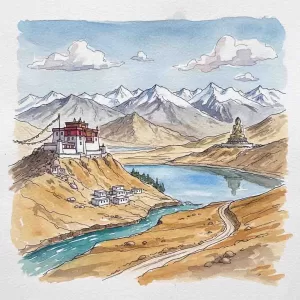



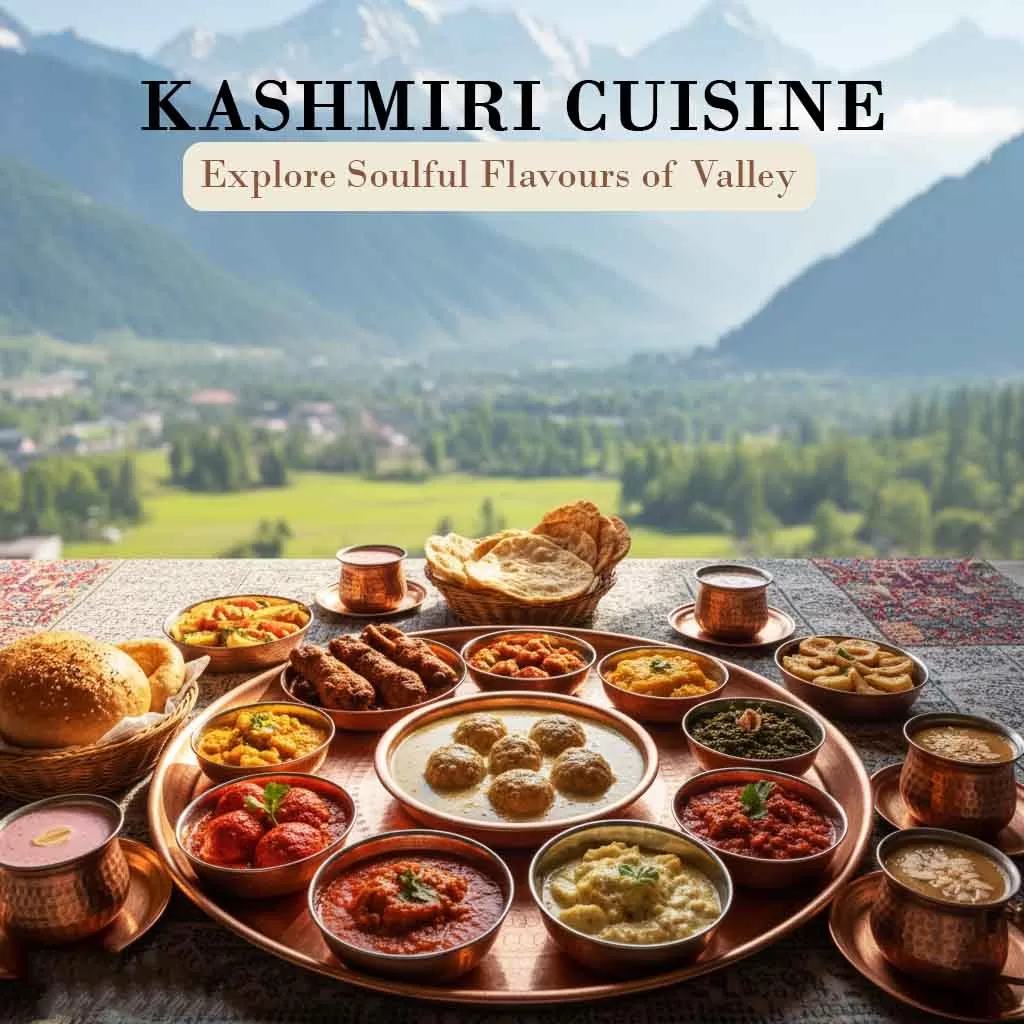
The valley of Kashmir, often celebrated as the Paradise on Earth, is renowned across the world for its pristine snow-laden mountains and breathtaking tourist destinations. However, not many people know that the state is not just home to some of the most serene landscapes but also boasts a delicious cuisine. The valley’s culinary heritage contains influences from Persian, Central Asian, and North Indian cuisines. This harmonious blend of flavours has evolved into a unique food palate that is soulful as well as a nutritional powerhouse. Be it the earthy aroma of the Kashmiri Kahwa or the mouthwatering traditional Wazwan feast. Kashmiri cuisine is a sensory journey across history, culture, and hospitality.
In this guide, we will take you through the journey of Kashmiri cuisine: its origins, must-try dishes. Whether you are a foodie or a tourist planning your next trip to Kashmir, at Himalaya Visit, we will help you explore Kashmiri food in depth.
The Roots of Kashmiri Cuisine
The origin of Kashmiri cuisine is as interesting as the history of the valley itself. The geography of the state, its climate and influence of multiple cultures has shaped its culinary heritage. The earliest inhabitants of the Kashmir valley such as the Dardic tribes as well as the Indo-Aryan population mainly consumed grains, vegetables, milk, and dried fruits. Due to the area experiencing harsh winters, foods were often sun-dried and preserved so that they can be consumed for a longer period. Popular ingredients of the Kashmiri cuisine such as the lotus stem (kakdhi), date back to this period.
Due to being a component of the Himalayas, Kashmir was an important trade destination along the ancient Silk Route. Thus, traders, travellers as well as invaders routinely arrived in the valley bearing goods as well as their own native culinary traditions. Over time, the traditional cooking methods and culinary influences from Persian, Central Asian, and Mughal cultures started shaping the Kashmiri cuisine.
At the height of the Muslim rule in Kashmir, during the 14th century, Sultan Zain-ul-Abidin, invited skilled cooks from Persia and Central Asia. These chefs, called wazas, introduced techniques like slow cooking (dum), extensive use of yogurt, saffron, and dry fruits. As a result, the practice of slow-cooking meat dishes became a crucial part of Kashmiri cuisine.
During the Mughal rule, the rulers introduced usage of rich gravies and aromatic spices in the cuisine. It was under their patronage that cultivation of saffron was encouraged in Pampore and dishes like Rohgan Josh and Yakhni were created. Wazwan under the Mughal influence was transformed into a symbol of aristocracy and hospitality.
It is interesting to note that parallel to the contribution of Persian and Muslim influences in the Kashmiri cuisine, the Kashmiri Pandit community was also developing its own variety of cuisine which is an integral part of Kashmiri culture even today. Kashmiri Pandits are traditionally non-vegetarian but avoid onion and garlic, as a result they crafted unique flavors using asafoetida (hing), fennel, and dried ginger. Their unique versions of rogan josh, yakhni, and vegetarian dishes like dum aloo and haak have a subtle taste.
Wazwan-The Royal Banquet of Kashmir
The word Wazwan is a blend of two Persian words-waz (meaning cook) and wan (meaning shop or place of cooking). Together, these two words mean the highest form of Kashmiri hospitality. It is have evolved as a cultural tradition that has been passed down centuries. It has its roots in the 14th century Persian cuisine during the reign of Sultan Zain-ul-Abidin. During the Mughal era, Kashmir became a summer retreat for the royal families. The Mughals popularized the Wazwan further. Dishes like rohgan josh and yakhni became staple food items.
Over centuries, Wazwan has become an integral part of the Kashmiri Muslim culture. Traditionally, it is served at wedding celebrations and festivals, containing up to 36 courses, mostly meat-based. The meal is served on a large copper platter (traem), shared by four guests. This act symbolizes unity and harmonious co-existence. A traditional Wazwan is prepared under the supervision of the head chef, known as the vasta waza. It is believed that serving Wazwan is a symbol of honour and hospitality.
Iconic Wazwan Dishes You Must Try:
- Rogan Josh
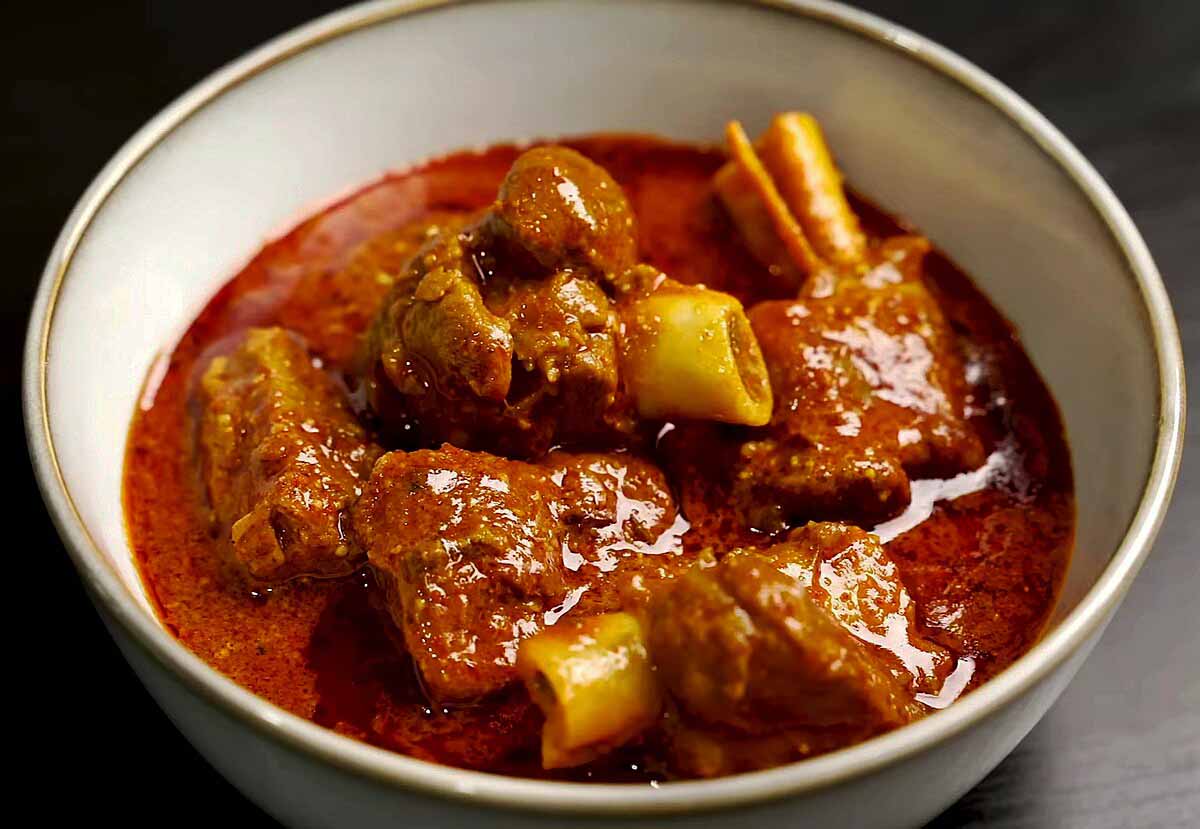
It is often considered the central piece of the grand Wazwan feast. This dish is cooked in oil at high intensity, forming a rich, aromatic curry. It contains heavy use of spices like Kashmiri red chili, fennel, and dry ginger gives it a distinct flavor.
- Gushtaba
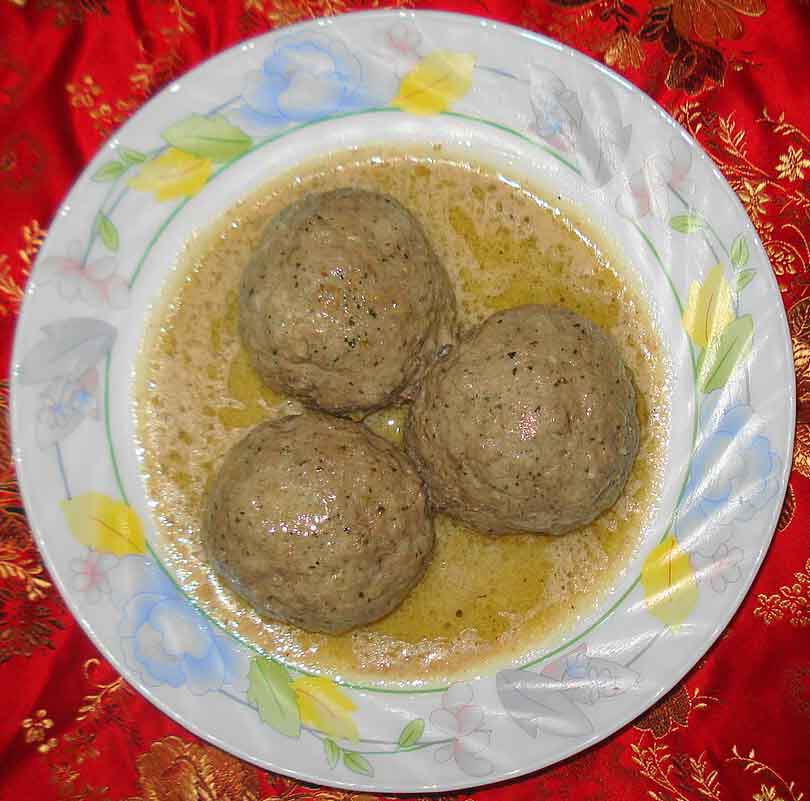
It is commonly known as the “dish of kings” in Kashmiri culture. It is a meat-based preparation of minced mutton meatballs simmered in creamy yogurt-based gravy and is often served at the end of Wazwan. It is believed that the true skill of a Kashmiri chef can be tested by preparing Gushtaba.
- Tabak Maaz
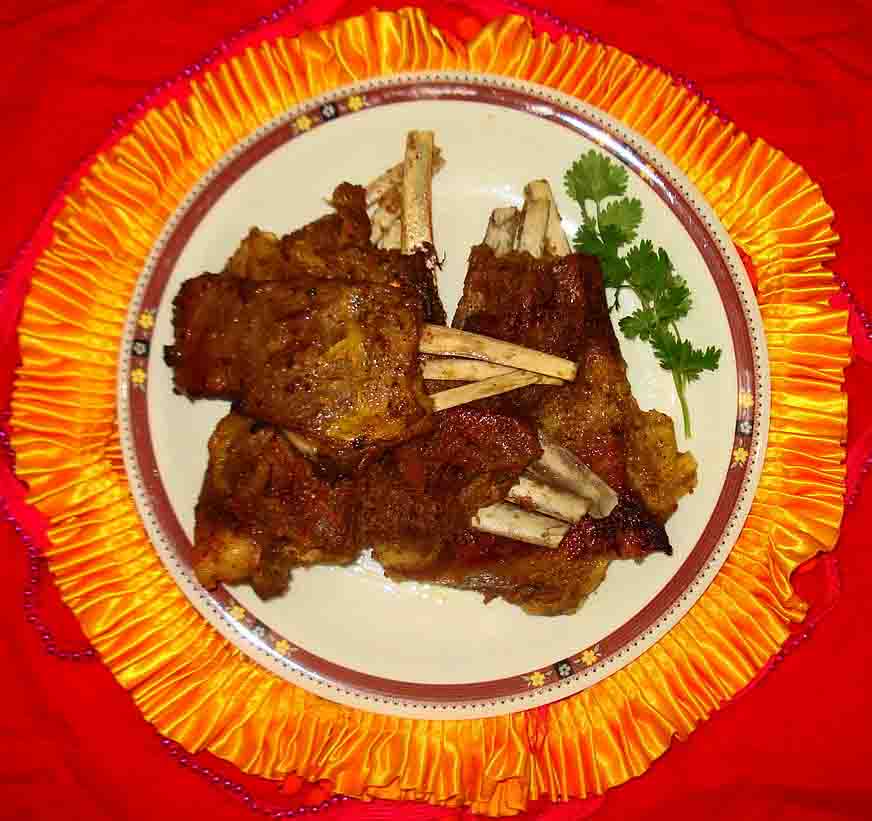
It is used as a starter course dish in Kashmiri cuisine. It is made from lamb ribs, they are first simmered slowly in milk with turmeric, fennel, and dry ginger. The ribs are then deep-fried in ghee giving them a crisp, golden-brown exterior while keeping the inside juicy and soft.
- Rista
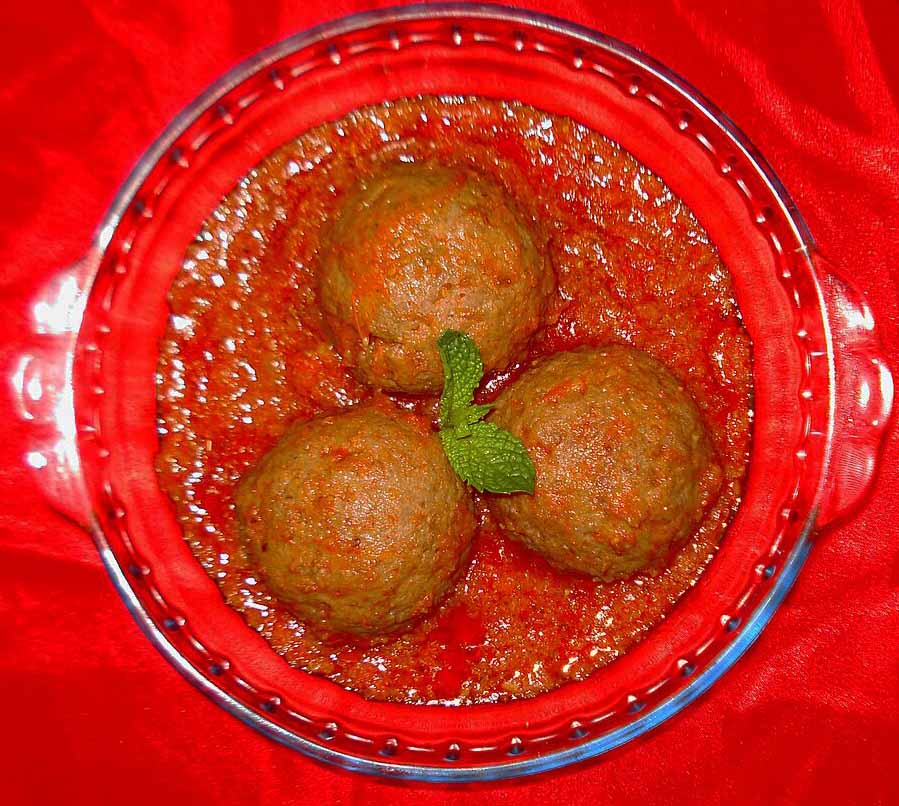
This dish consists of delicate meatballs made from finely pounded lamb or mutton, quite similar in preparation to Gushtaba, but cooked in a fiery red gravy prepared from curd (yogurt), saffron, and a blend of Kashmiri red chilies, fennel, cardamom, and dry ginger, giving it a signature deep-red hue without being overly spicy.
- Yakhni
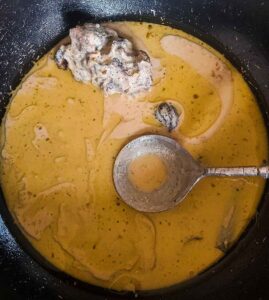
Yakhni is a yogurt-based mutton curry prepared with lamb or mutton, simmered in curd and infused with whole spices. Yakhni has a silky, tangy, and aromatic gravy that clings to the meat, offering a soothing and refreshing taste. Its flavors are subtle rather than overpowering, making it a comforting dish. Yakhni is served in both Kashmiri Pandit and Kashmiri Muslim households.
Vegetarian Delights of Kashmiri Cuisine
While Kashmiri cuisine is replete with scrumptious non-vegetarian dishes, the state also has a variety of mouth-watering vegetarian dishes. As a result of the Buddhist and Pandit influences, the state has developed a unique variety of vegetarian cuisine. These dishes highlight the variety of Kashmiri culinary heritage as not being restricted only to meat-based preparations.
Some popular vegetarian Kashmiri dishes include:
- Dum Aloo

Dum Aloo is one of the most famous vegetarian dishes of the valley. It is renowned for its simplicity and rich flavour. Unlike its north Indian sibling, Kashmiri Dum Aloo consists of small baby potatoes that are boiled and then deep-fried. The fried potatoes are slowly cooked or “dum” in a gravy made from curd (yogurt), Kashmiri red chili powder, fennel, ginger powder, cardamom and cloves. It is renowned for its vibrant red color from Kashmiri chili.
- Haak
Haak refers to a preparation made from green leafy vegetables simmered in a light broth with minimal spices. Haak is celebrated for its subtlety and purity. The greens are cooked in mustard oil with just a touch of asafoetida (hing), salt, and dried red chilies. It is favourite due to its nutritiousness and its quick preparation method.
- Nadur Yakhni
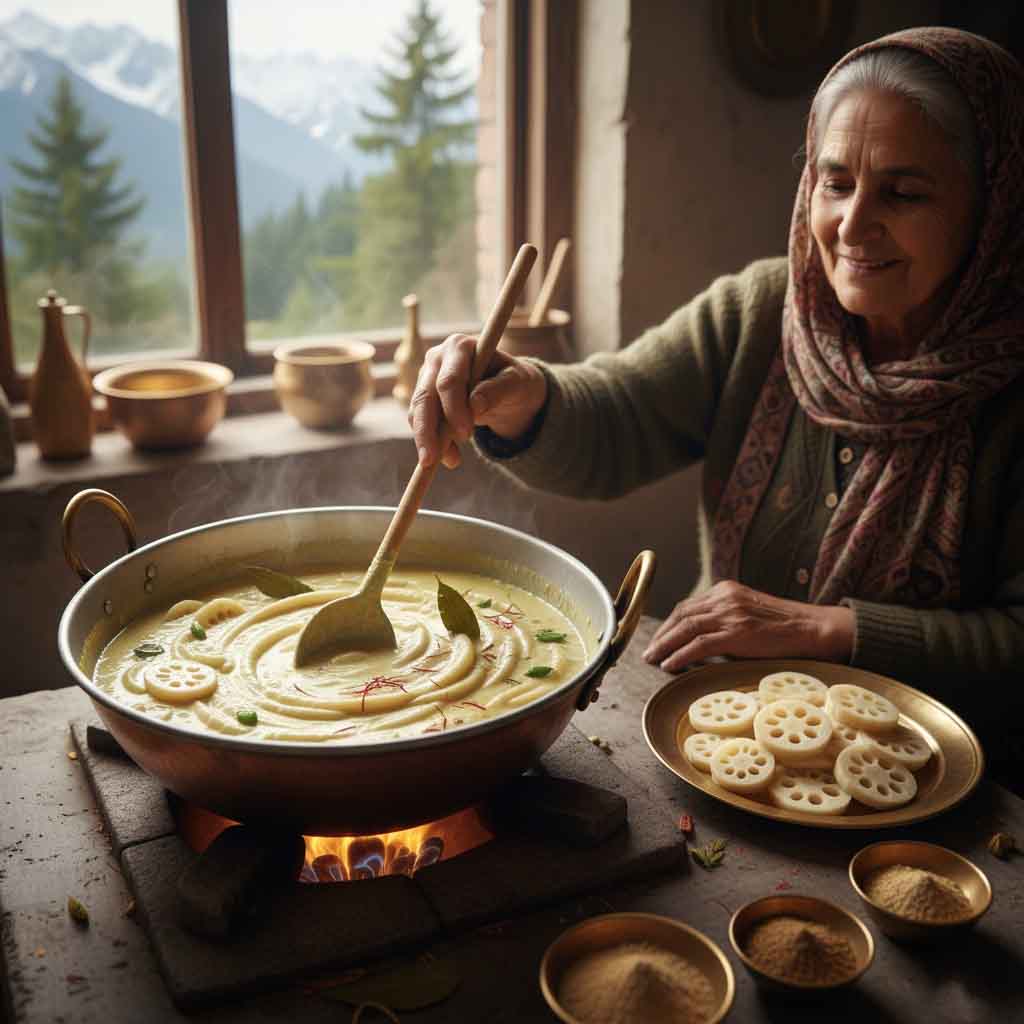
Nadur Yakhni means lotus stem curry. Lotus stem is a common ingredient in Kashmiri cuisine. The lotus stems are cut into long pieces and simmered in a yogurt gravy flavored with fennel seeds, dry ginger, bay leaves, cloves, and cardamom. Nadur Yakhni is celebrated for its mild, tangy, and aromatic flavour. It is considered a Sattvic dish because it is traditionally prepared without onion and garlic.
- Rajma Gogji
Rajma Gogji is a spicy rajma curry which is prepared with kidney beans (rajma) and turnips (gogji). It is celebrated for its milder and rustic charm. The kidney beans are slow-cooked with soft turnip chunks in a curry flavored with ginger powder, fennel, Kashmiri red chili, and mustard oil. The turnips gives a unique sweetness to the curry balancing the spicy taste of the rajma. Rajma Gogji is popularly consumed during winters.
- Chaman Qaliya
“Chaman” refers to a dish which is made of paneer, while “Qaliya” refers to the gravy preparation. Large cubes of paneer are first lightly fried until they turn golden and then they are simmered in a rich gravy of yogurt, turmeric, fennel, and dry ginger powder, giving the dish a yellow tint. Chaman Qaliya is also a Sattvic dish as it avoids onion and garlic. Chaman Qaliya is a culturally important dish and is often served during festivals, pujas, and wedding feasts in Kashmiri Pandit households.
Kashmiri Breads: A Morning Ritual
No exploration of Kashmiri cuisine is complete without talking about its breads. Kashmiri breads are usually baked in traditional clay ovens (tandoors) and enjoyed with tea. Some famous breads you must try are.
- Girda
-
A round bread, crispy on the outside, soft inside, eaten with butter and tea.
- Lavasa
-
A thin, soft bread, often used to wrap kebabs.
- Tsot
-
A small, round bread usually enjoyed with butter or jam in the mornings.
- Kulcha
-
A crunchy bread topped with sesame seeds, enjoyed as a snack.
Kashmiri mornings often begin with fresh bread from local bakeries and a steaming cup of noon chai (salt tea).
Kashmiri Beverages: From Noon Chai to Kahwa
The cold climate of Kashmir makes hot beverages an essential part of daily life. Kashmiri teas are not just drinks but rituals of warmth comfort.
- Noon Chai (Sheer Chai)
-
Kashmiri Noon chai is a unique beverage prepared with green tea leaves, baking soda, milk, and salt. It is famous for its pink hue and traditionally served with breads.
- Kahwa
-
This is the most famous Kashmiri drink. It is prepared by brewing saffron, cardamom, cinnamon, and topped with crushed almonds or walnuts. Kahwa is often served to guests as a gesture of hospitality.
Kashmiri Desserts: Sweet Endings
Kashmiri desserts are scrumptious treats which are prepared with less sugar and subtle, aromatic flavours.
- Phirni
-
It is similar to kheer. It is a creamy rice pudding flavoured with saffron and cardamom, served in small clay pots.
- Shufta
-
It is a rich dry fruit dessert made with almonds, cashews, walnuts, dates, and sugar syrup, flavored with saffron and spices.
- Kong Phirni
-
It a unique improvisation of phirni and is prepared by infusing in the traditional phirni.
Travel Tips for Experiencing Kashmiri Food
- Don’t Miss a Wazwan Feast
-
A traditional Wazwan is an important part of Kashmiri cuisine. If you get invited to a wedding or a local gathering, it’s a once-in-a-lifetime culinary experience you shouldn’t skip.
- Try Both Vegetarian and Non-Vegetarian Dishes
-
While meat-based dishes are famous, Kashmir is a goldmine of vegetarian recipes as well. Make sure to balance your culinary exploration to appreciate the diversity of Kashmiri culture.
- Pair Every Meal with Kashmiri Rice
-
Almost all Kashmiri dishes are designed to be consumed with short-grain Kashmiri rice. It is paired beautifully with non-vegetarian as well as vegetarian dishes and enhances the flavors of dishes like Yakhni or Rajma Gogji.
- Sip Kahwa and Noon Chai
-
To truly appreciate Kashmiri food culture, have a steaming cup of Kahwa, or Noon Chai.
- Eat Local, Eat Seasonal
-
Kashmir’s cuisine is heavily influenced by the seasons. In winter, warm and hearty foods like Rajma Gogji, while summer meals usually feature fresh greens like Haak. Make sure to time your meals as per the season for the best experience.
- Respect Food Etiquette
-
In traditional Kashmiri households, meals are usually shared from a large trami (platter). Respect local customs and enjoy the communal style of eating as it is an integral part of the culture.
Experience the Authentic Flavours of Kashmir with Himalaya Visit
From the luxurious royal spread of a traditional Wazwan to the comfort of a steaming cup of Kahwa, Kashmiri cuisine is more than just food, it’s a journey into the heart of the valley’s culture and history. With Himalaya Visit, you don’t just taste Kashmir, you live it. Our curated tours take you beyond the ordinary, letting you savor authentic dishes in local homes, explore vibrant markets, and dine under the shadow of snow-capped peaks.
Ready to indulge in the true taste of Kashmir?
Book your journey with Himalaya Visit today and let every meal become a story worth remembering.