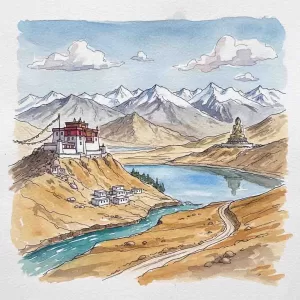
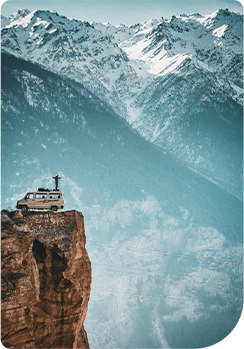
Some places are more than just travel destinations; they are havens of tranquillity that touch your soul. Zanskar is one of those rare places, a high-altitude Himalayan valley tucked away like a forgotten jewel in Ladakh, the crowning glory of Indian subcontinent. Frustrated of the soul-scorching heat waves of Delhi, I decided on an impulse to embark on a 14-day adventure across Ladakh and Zanskar. What ensued was a deeply moving experience. Zanskar is not just a land of spectacular landscapes but a tapestry of rich culture woven in the rhythm of daily life. This is my heartfelt tribute to a place that transformed me from within. But as unforgettable as the landscapes were, this journey would not have possible without the seamless travel support from Himalaya Visit.
Day 1: Arrival in Leh – A Fairytale Welcome
We landed in Leh, the capital city of Ladakh. Flying into the city felt like stepping into a fairytale that is nestled amongst the towering peaks of Himalayas. The snow-laced mountains and the clear skies were a breathtaking welcome sight. From the aircraft, iconic peaks like K2, Nanga Parbat, Gasherbrum were so close I felt that I can reach out and touch them.
Thanks to the excellent travel support provided by the dedicated team at Himalaya Visit, my arrival was seamless. Our driver was already waiting at the airport holding a placard with my name. The car was clean, comfortable, and stocked with water.
I checked in the hotel and spent most of the day acclimatising to the weather conditions of Ladakh. In the evening, I kickstarted my travel itinerary by visiting Leh Palace, a 17th-century royal residence built by King Sengge Namgyal in the 1600s, meant to be the royal residence for the Namgyal dynasty.
My next stop was Shanti Stupa, an ancient structure built by Japanese Buddhist monks in 1991 as a symbol of peace and unity. One can get a panoramic view of the Leh town and the snow-capped mountains that cradle it. I was mesmerized by the tranquillity of the place. Shanti Stupa is not just a monument, it’s a moment of stillness and spiritual connection that stays with you long after you leave.
DAY 2: Leh – A Glimpse into History and Valor
After a hearty meal, we set out to explore Spituk Monastery, a Buddhist monastery in Spituk, 8 km from Leh. The monastery is home to 100 Buddhist monks from the Tsongkhapa order of Tibetan Buddhism. Stepping inside the monastery is like taking a walk down the forgotten chapters of Ladakhi history.
Our next destination for the day was Hall of Fame, a museum maintained by the Indian Army. It is a tribute to the extraordinary courage, sacrifice, and resilience of the soldiers of Indian army who fought in the Kargil war. The thoughtfully curated displays, photographs, and stories stirred up a profound sense of pride at the formidable strength of our nation.
Day 3: Leh-Nubra Valley Via Khardung La – Roads to the Sky
We began our journey towards the breathtaking Nubra Valley. The drive from Leh to Nubra took us across the legendary Khardung La Pass, reputed as the highest motorable road in the world. Located about 39 km from Leh, Khardung La offers breath-taking views, looking south, we could see the majestic Zanskar range, while to the north, the towering peaks of the Saser Massif met our sight.
Nubra valley is a high-altitude region situated between the Karakoram and Ladakh ranges of the Himalayas, at an average altitude of 10,000 feet. Its Tibetan name is Dumra which means “Valley of Flowers”.
We arrived at Hunder, our base in Nubra, and checked into a cozy camp that offered both comfort and warmth. As evening approached, I strolled through the tiny surrounding villages, getting a glimpse into the daily routine of the local Ladakhi villagers. If you are interested in exploring the rich and vibrant culture of the region, visits to traditional Ladakhi homes can also be arranged by Himalaya Visit at an additional cost.
Day 4: Nubra Valley – Exploring the Far Edges of India (Turtuk)
In the morning, we embarked on a scenic drive to Turtuk, a village located at the farthest edge of India’s northern frontier. This region, along with several other small villages, came under Indian control after the 1971 war. forces. The region remained inaccessible to Indian civilians until as recently as 2010 due to the sensitive nature of the region’s proximity to the border and the presence of military base camps. Despite the hurdles of landslides and shooting stones, our 3-hour drive from Hunder to Turtuk was truly breathtaking. Throughout the route, we could see the mighty Shyok River flowing beside us. We explored the rich cultural landmarks of Turtuk such as the Turtuk monastery and returned to our camp in Hunder for dinner and overnight stay.
DAY 05: Nubra Valley To Pangong Lake – A Blue Dream
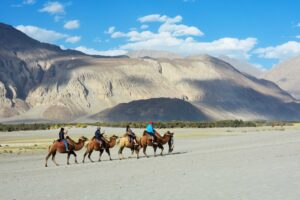
We began our journey towards Pangong Lake. En-route, we stopped to ride Bactrian camels, (double-humped camels). The ride atop the majestic camel amidst the backdrop of Hunder was thrilling.
Our next destination was Diskit, the administrative headquarters of Nubra Valley. We took a stroll through the local bazaar where we observed traditional Ladakhi shops selling a variety of souvenirs. We also visited Diskit is also home to a 515-year-old Buddhist Monastery, known as Diskit Gompa. It is the oldest and largest Buddhist monastery in Diskit and belongs to the Gelugpa sect of Tibetan Buddhism.
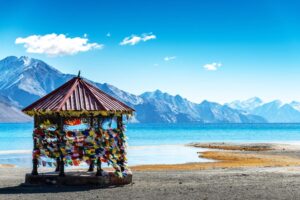
After passing through Durbuk and Tangtse, and a few remote Changthang villages, we finally reached Pangong Lake, situated at an altitude of 14,000 feet. This stunning lake is around 5 to 6 km wide. Half of the lake lies across the Indo-China border. The vivid blue hue of the lake is awe-inspiring, making it one of the most photogenic places in Ladakh. Upon our arrival, we checked in to our camp near Pangong Lake.
Day 06: Pangong Lake to Leh Via Changla Pass – A Spiritual & Scenic Return
After spending the early hours of the morning by the stunning Pangong Lake and soaking in its tranquil beauty, we began our drive back to Leh via the mighty Changla Pass (5,486 meters), one of the highest motorable passes in the world.
En route, we stopped to visit some of Ladakh’s most significant cultural and historical landmarks:
1. Hemis Monastery- Hemis Monastery is a Himalayan Buddhist monastery (gompa) of the Drukpa Lineage. It was re-established in 1672 by the Ladakhi king Sengge Namgyal. Every year in early June, the annual Hemis festival honouring Padmasambhava is held here. Beautiful thangkas (Buddhist scroll paintings), ancient manuscripts, gold and silver stupas, and a rich collection of ritual objects are on display here. The monastery has a large prayer hall.
2. Thiksey Monastery- This 12-story architectural marvel is often referred to as the “Mini Potala Palace” because of its resemblance to the Potala Palace in Lhasa, Tibet. This monastery was founded in the mid-15th century by Paldan Sherab, a disciple of Tsongkhapa, the founder of the Gelugpa sect of Tibetan Buddhism. It is a tiered structure offering a stunning view of the Indus Valley. Each tier houses different temples, shrines and monastic quarters. The Assembly Hall (Dukhang) is a prayer hall containing beautiful wall murals, sacred texts, and statues of Buddha Shakyamuni, Avalokiteshvara, and other deities. The main attraction is the 15-meter-high statue of Maitreya (Future Buddha), the largest of its kind in Ladakh. The rooftop offers panoramic views of the surrounding mountains, the Indus River, and the wide expanse of Ladakhi terrain – a photographer’s paradise.
3. Shey Palace- Shey Palace was once the summer capital of Ladakh’s kings. The three-storey high statue of Shakyamuni Buddha inside the adjoining Shey Monastery was awe-inspiring, glowing softly in the ambient light and filling the room with a quiet reverence. The palace offers panoramic views of the Indus Valley, lush green fields, and distant snow-capped peaks that took my breath away. The gentle spirituality in the air, Shey Palace gave me a deep sense of connection to Ladakh’s regal and spiritual heritage.
4. Rancho’s School (Druk Padma Karpo School)- The Druk White Lotus School is known locally as the Druk Padma Karpo School. It garnered immense popularity after being featured in Aamir Khan’s critically acclaimed Bollywood movie “3 Idiots”.
After exploring these iconic sites, we continued our drive and returned to Leh by evening.
Day 07: Leh To Sham Valley – A Blend of Spirituality and Mystery
On the 7th day of our stay, we began our journey along the Indus river on the Leh–Kargil Highway. Our first stop was Gurudwara Patthar Sahib, a sacred site built in 1517 to commemorate the visit to the Ladakh region of Guru Nanak Dev, the founder Guru of the Sikh faith. The site is revered by both Sikhs and locals for its spiritual significance. Afterwards, a short 4 km drive led us to the fascinating Magnetic Hill, a spot where vehicles appear to move uphill on their own, defying the laws of gravity. After being mesmerized by the unique thrills of the Magnetic Hill, we reached the confluence of the Indus and Zanskar rivers.
Our next stop was Likir Monastery, one of the region’s most vibrant monasteries. As we approached, we were greeted by a newly installed colossal gilded statue of Maitreya Buddha, standing tall under the open sky. After spending time exploring the monastery, we continued our drive along the Indus River towards Uletokpo or Tingmosgang. En route, we visited Ridzong Monastery, noted as the paradise for meditation.
After a spiritually rich and visually stunning day, we drove further and checked in at our camp for a peaceful overnight stay amidst the tranquil beauty of Sham Valley.
DAY 08: Sham Valley to Kargil – Moonscapes and Mountain Passes
We began our scenic drive towards Kargil. Our first major highlight was a visit to the 11th-century Lamayuru Monastery, one of the oldest monasteries in Ladakh. The landscape surrounding the monastery is similar to the terrain of the moon, justifying the epithet Moonland that is often attributed to Ladakh. The place is a backdrop for stunning photographs.
We continued our journey to Fotu La Pass, which at 13,489 feet and is known as the highest point on the Srinagar–Leh highway. Throughout our drive, we were greeted with panoramic views of the rugged Himalayan terrain and deep mountain valleys. Upon arrival in Kargil, we checked in at our hotel for a well-earned rest after an eventful day.
Day 09: Kargil To Rangdum – Raw Beauty and Solitude
We began our journey toward Rangdum, a village located in the Suru Valley midway between Kargil and Padum. The village is home to some of the most breath-taking landscape visuals, on one hand were steep hills while on the other were lush pastures and glacial streams. The village is also famous for its ancient Rangdum Monastery, one of the most revered and spiritually significant Buddhist sites in the region.
Upon arrival, we checked in at our camp where we spent the rest of the day relaxing in the solitude and raw beauty of Rangdum.
DAY 10: Rangdum – Padum Via Suru Valley – Deeper into Zanskar
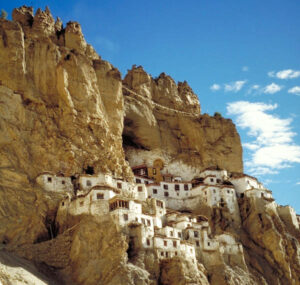
In the early hours of the morning, we began our journey to Padum, the current administrative center of the Zanskar region. The town is named after Buddhist guru Padmasambhava, it was historically one of the two main capitals of the Zanskar Kingdom. En route, we visited Sani Monastery, located approximately 6 km west of Padum. It is thought to be the oldest religious site in the region and dates back to the rule of the Kushana emperor Kanishka.
Upon arrival in Padum, we checked in at our camp for an overnight stay.
DAY 11: In Padum – Excursion to Karsha & Bardan Monasteries – Artistic and Spiritual Wonders
On the 11th day of our travel itinerary, we set out for a full-day excursion to two of Zanskar’s most significant monasteries, Karsha and Bardan.
Karsha Monastery is the largest monastery in the Zanskar Valley, it is located about 9 km from Padum, overlooking the confluence of the Stod and Lungnak rivers. The monastery is famous for its serene atmosphere and breathtaking views. The history of the monastery dates back to the 10th or 11th century. It is believed to have been founded by the great translator Phagspa Shesrab, a disciple of the famous teacher Rinchen Zangpo, who helped spread Buddhism throughout the western Himalayas. The structure is spread across multiple levels. The main assembly hall, or Dukhang, contains several ancient murals, thangkas (sacred paintings), and statues that reflect centuries of Buddhist art and devotion, perfect for art-history buffs. The monastery is home to over 100 monks and hosts an important annual festival called Gustor, during which sacred mask dances are performed to symbolize the triumph of good over evil.
After exploring Karsha, we proceed towards Bardan Gompa. It is located approximately 12 km south of Padum, the monastery stands atop the rocky outcrop above the banks of the Tsarap River. Bardan is believed to have been established in the 17th century. It was one of the first monasteries to be built in Zanskar and played a key role in spreading the teachings of Buddhism in the region. Bardan houses a small community of monks and several ancient prayer halls adorned with faded murals, Buddhist scriptures, and images of deities. The main prayer hall is reputed for its impressive wooden statues and hand-carved details, reflecting the craftsmanship and devotion of earlier times.
After a spiritually enriching day, we returned to our accommodation for dinner and relaxation.
DAY 12: In Padum – Excursion to Stongde & Zangla – Offbeat Discoveries
Our first stop for the day was Stongdey Monastery, located 18 km north of Padum on the road to Zangla. The monastery was founded in 1052 by translator Lama Marpa Lotsawa (1012-1097). It is the second largest monastery in Zanskar, with a community of about 60 Gelukpa monks. There are seven temples in the monastery.
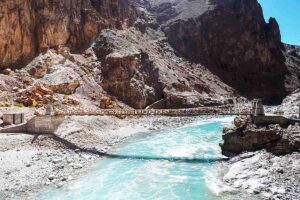
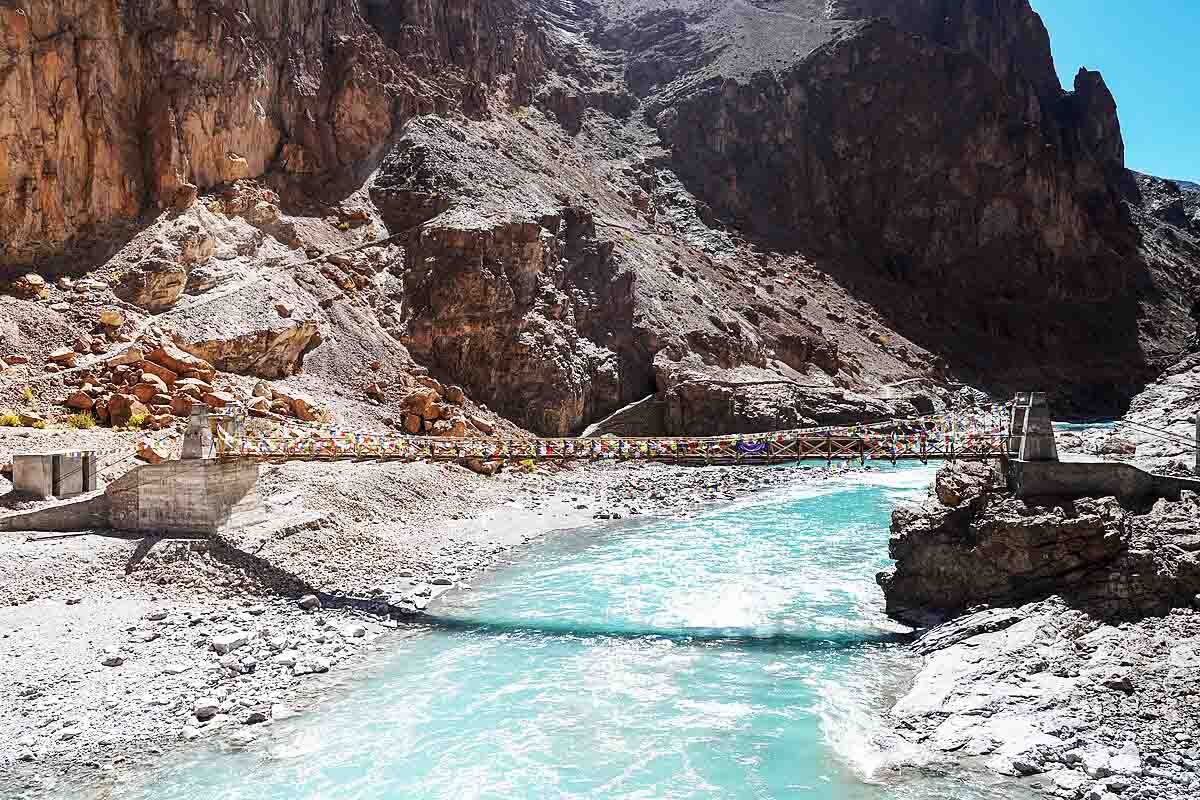
From here, we drove further to Zangla. It is a small village Located about 35 km from Padum. Zangla is surrounded by barren mountains and untouched natural beauty, making it one of the most fascinating offbeat destinations in Ladakh. Few attractions in Zangla village are the Zangla Fort or Zangla Palace offering panoramic views. Zangla is home to a small monastery and nunnery where young nuns live and study Buddhist philosophy. The drive to Zangla was a thrilling experience in itself, as we drove through the narrow, rugged roads, we saw dramatic rock formations, crossing wooden bridges. We also passed several traditional Ladakhi villages.
After the visit, we returned to Padum for dinner & overnight stay at the camp.
DAY 13: Padum – Kagril – The Long and Scenic Road Back
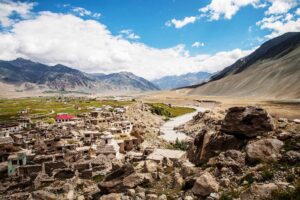
After breakfast, we checked out and embarked on the long but scenic drive back to Kargil, passing through the spectacular Rangdum plateau and Suru Valley. The Suru Valley is one of the most fertile and scenic regions of Ladakh. It is located south of Kargil and stretches along the Suru River, a tributary of the mighty Indus river. The valley has lush green fields and apricot orchards. The site is a photographer’s dream and a peaceful retreat for those seeking quiet beauty and cultural immersion.
At the far end of Suru Valley lies Rangdum, a high-altitude settlement located at around 3,657 meters (12,000 ft). The area is s surrounded by desolate mountains and glaciers. The central attraction of Rangdum is the Rangdum Monastery. It is home to a small community of monks and provides panoramic views of the entire valley.
Upon arrival in Kargil, we checked in at the hotel for dinner and overnight stay.
DAY 14: Kargil to Srinagar – Honoring Army Heroes and Serene Farewell
The last leg of our journey was travel to Srinagar in the early hours of the morning. We also passed through Drass, famously known as the second coldest inhabited place on Earth. Some interesting attractions along the way were Kargil War landmarks such as Tiger Hill and Tololing Park. We briefly stopped at Vijay Smarak (War Memorial) to pay respects to the valiant soldiers of the Indian army who laid down their lives during the 1999 Kargil War.
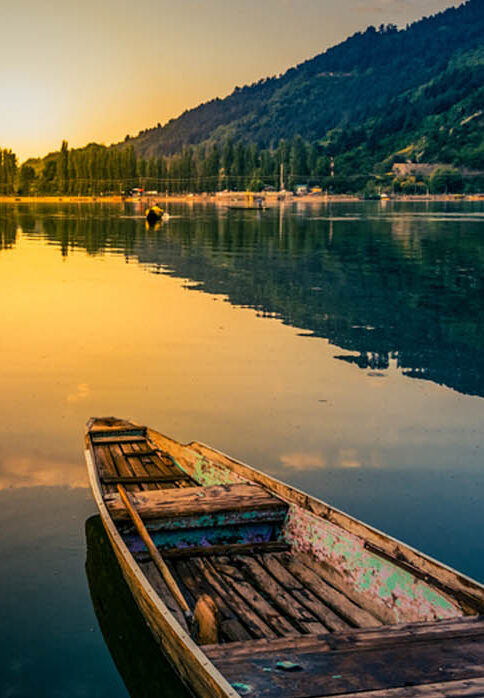
We arrived in Srinagar by the afternoon. The rest of the day were spent in leisure and relaxation. The highlight of our day was the marvellous accommodation arranged at a beautiful houseboat on Dal Lake arranged by Himalaya Visit. The mesmerizing scenery of the Dal lake were soothing to the soul.
Ready to Discover Ladakh Like Never Before?
Let Himalaya Visit turn your dream trip into reality! From the moment you land to your final farewell, we take care of everything, comfortable transport, curated stays, offbeat experiences, inner-line permits, and warm local guidance. Whether you seek adventure, peace, or spiritual discovery, we craft journeys that feel personal, seamless, and unforgettable.
Don’t just travel- Experience Ladakh the way it’s meant to be.
Reach out today & let the Himalayas welcome you with open arms.
Customizable itineraries
Experienced local support
End-to-end travel solutions
Book now with Himalaya Visit-Where every journey is handcrafted with heart.